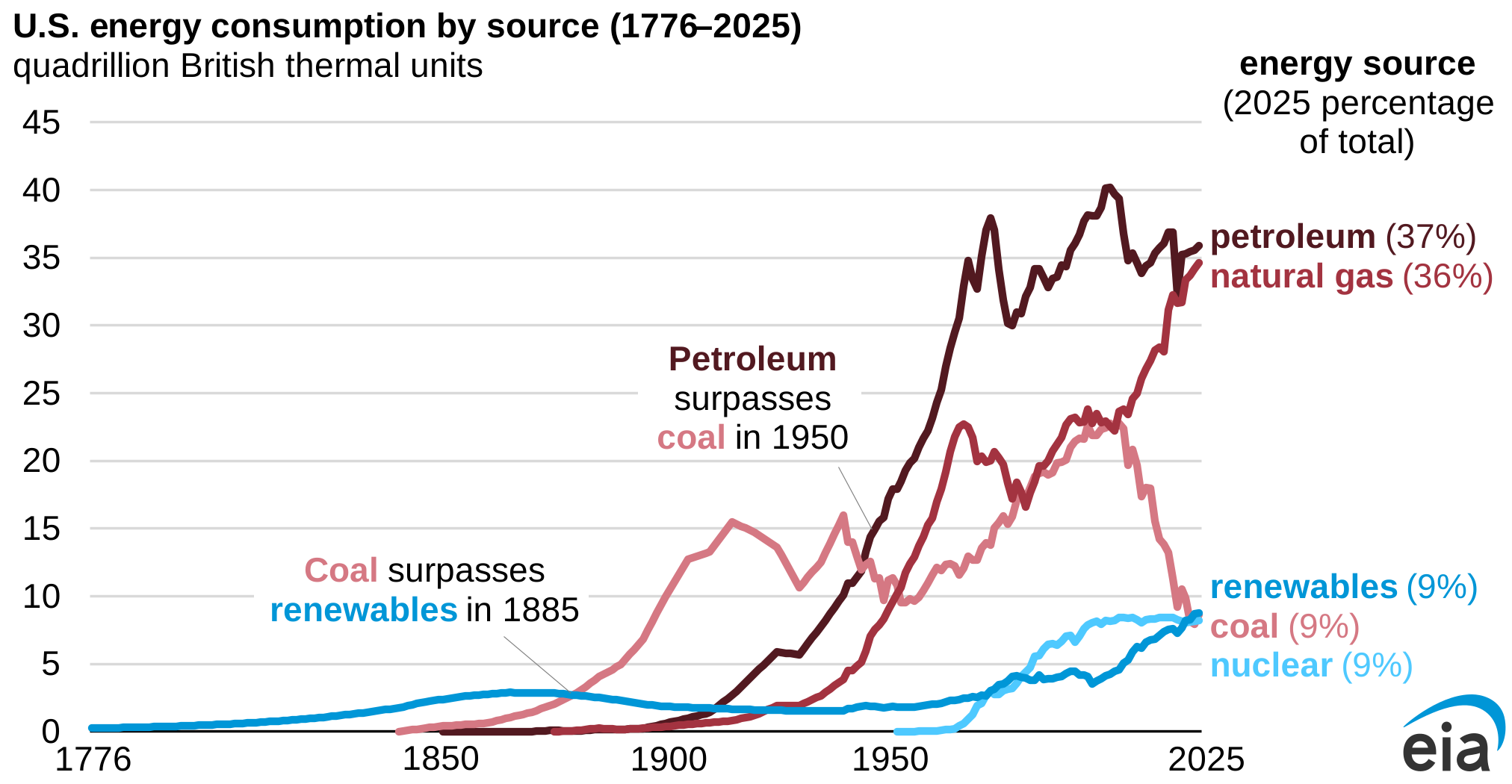
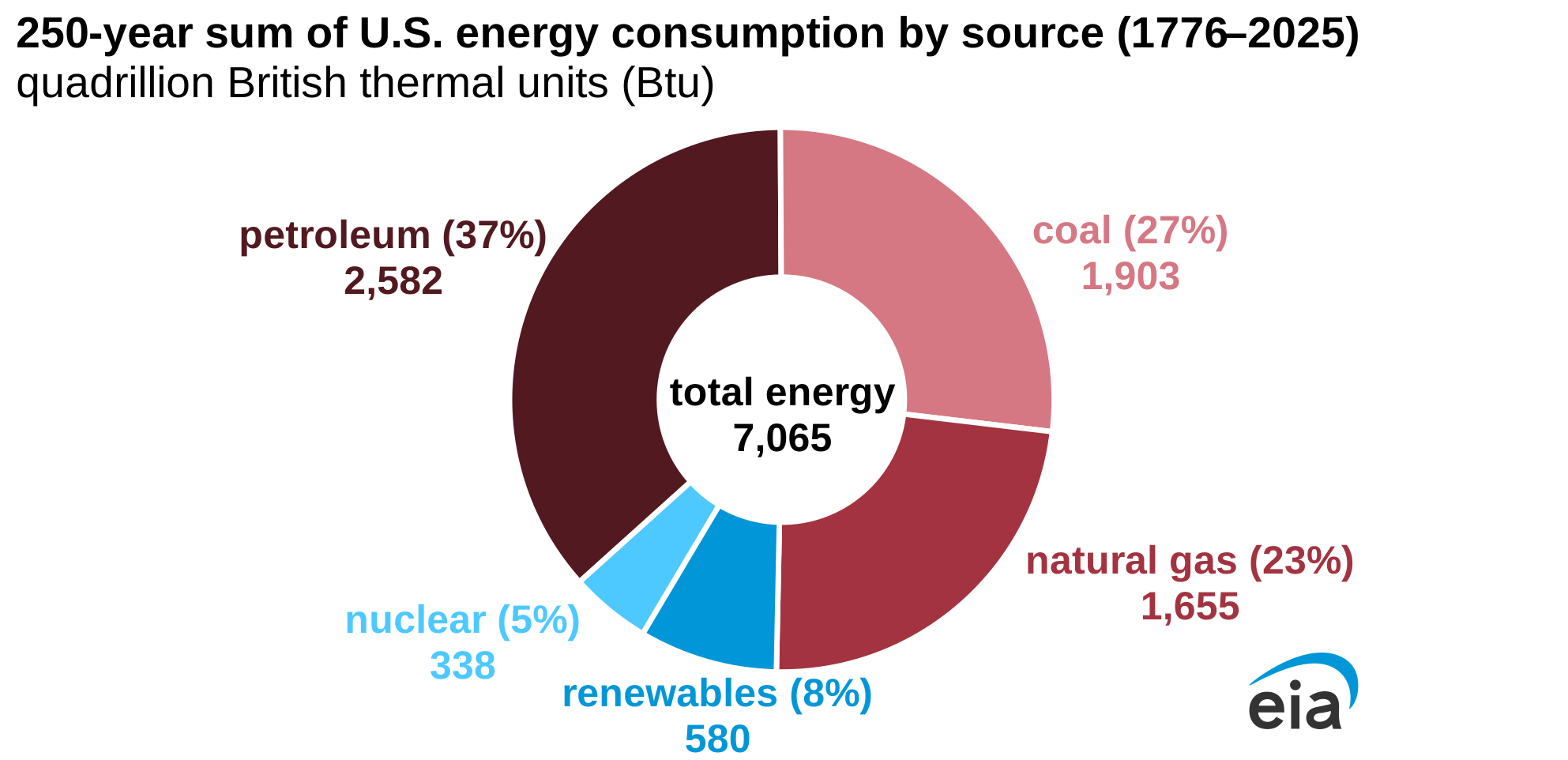
Over the 250-year history of our nation, energy consumption has evolved from wood use in the 18th and 19th centuries to today’s use of modern renewable, hydrocarbon, and nuclear technology. In 2025, total energy used in the United States was 96 quadrillion British thermal units (quads), up 2% from 2024, but below 2007’s record 99 quads. Petroleum was the most-used energy source last year, followed closely by natural gas. Use of renewable, coal, and nuclear energy each made up about 9% of total energy use.
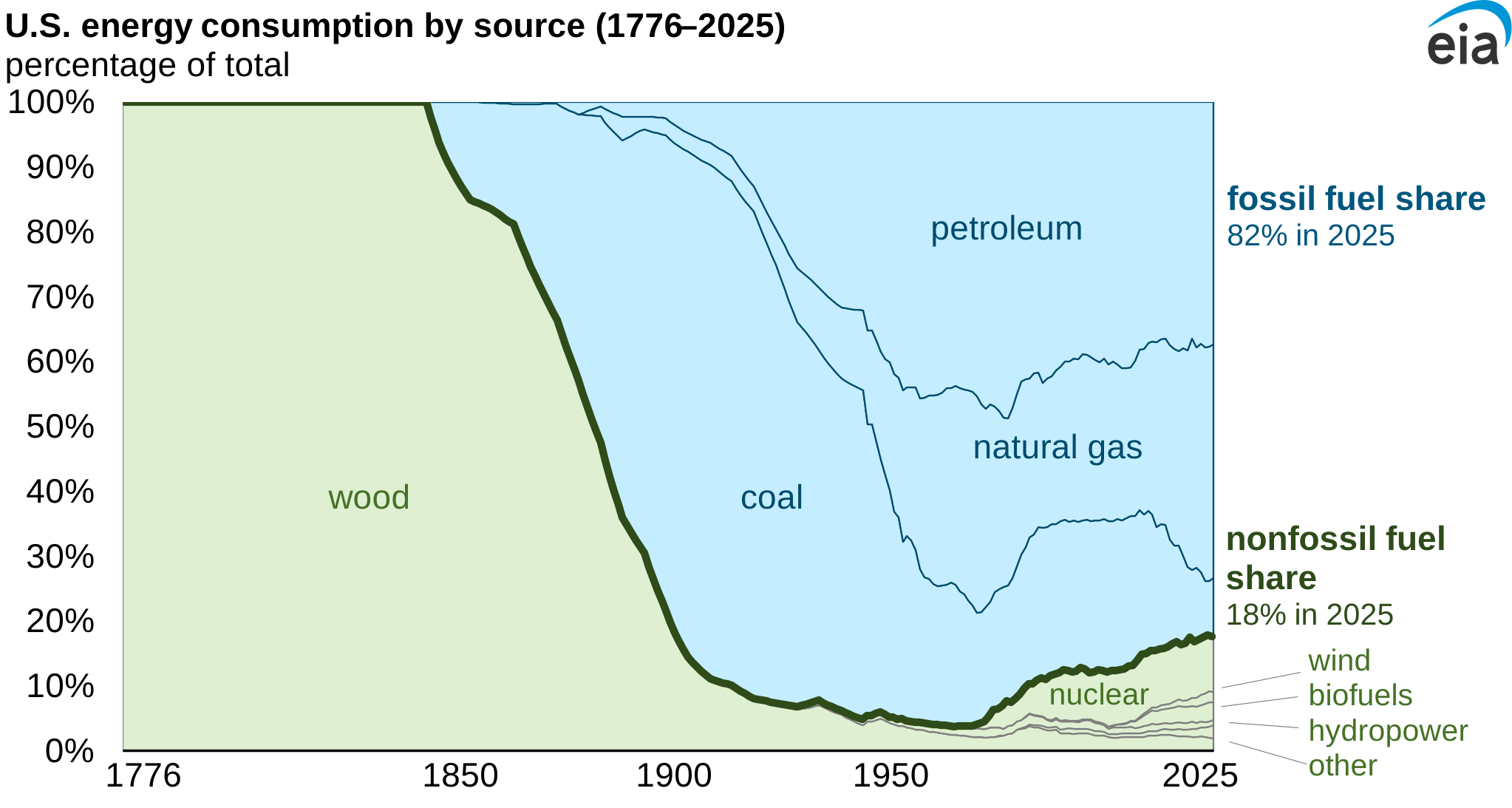
As a share of total energy consumption in the United States, wood was the most-consumed source of energy early in our history. Fossil fuels emerged as the largest share of energy, starting with the use of coal, which expanded rapidly. With the more recent emergence of nuclear power and forms of renewable energy such as wind and solar, the total share of energy generation from fossil fuels decreased. However, as of 2025, fossil fuels still accounted for the vast majority of energy consumed in the United States, accounting for 82% of energy consumed.
The 18th and 19th centuries (1776–1900)
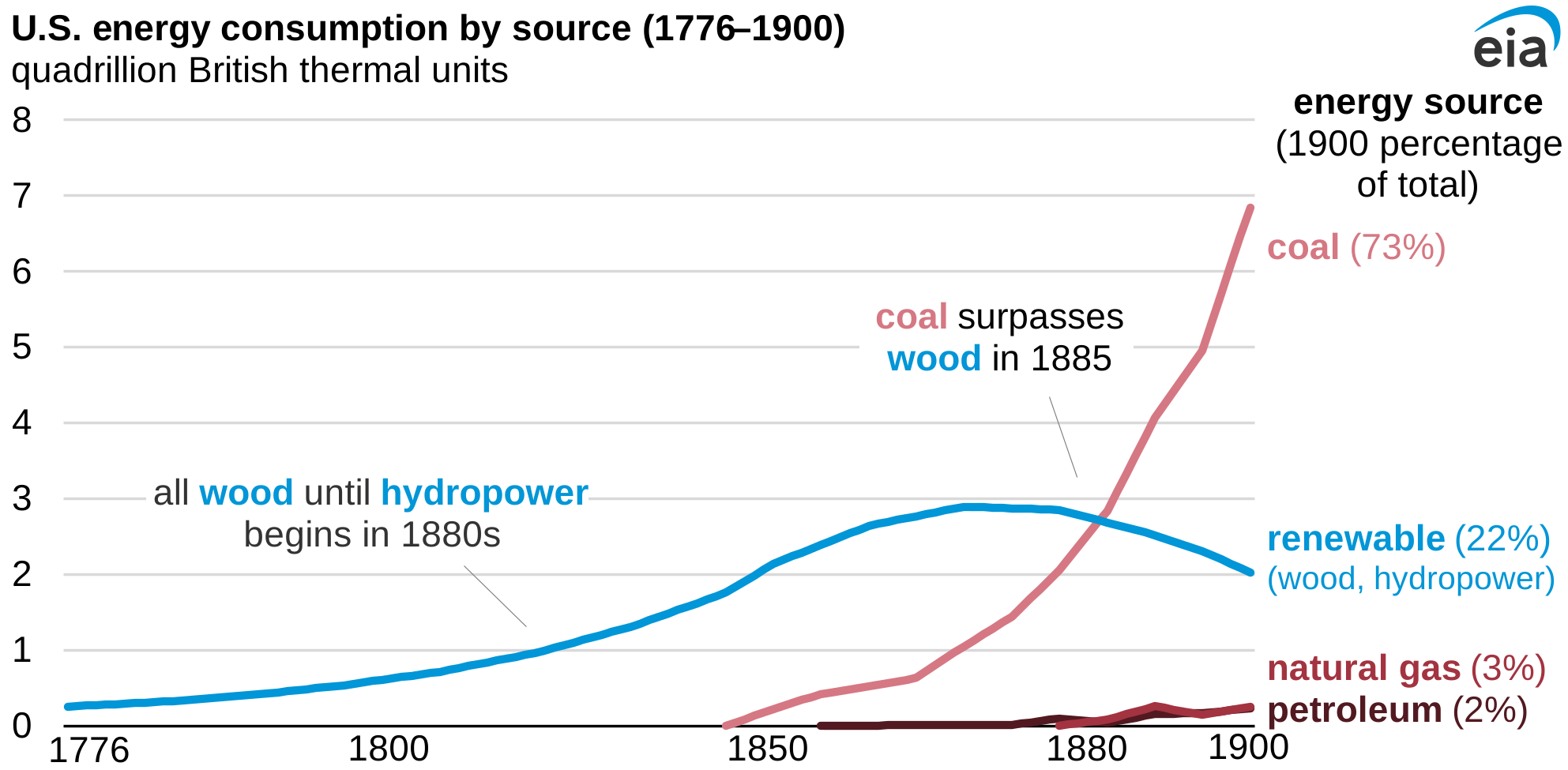
When the Declaration of Independence was signed in 1776, wood, a renewable energy source, was the main source for heating, cooking, and lighting. Earlier, in 1742, one of our nation’s founding fathers, Benjamin Franklin, designed a more efficient, metal-lined wood stove. Wood remained the largest U.S. energy source as America expanded westward until the late 1800s. The United States still uses wood energy, mainly to generate electricity at industrial lumber and paper plants that burn excess wood waste.
Coal became a widely used energy source in the United States during the mid-1800s, and in 1830 a demonstration steam-powered train called Tom Thumb showed the potential of coal-burning steam engines and locomotives. EIA’s coal data series begins in the mid-1800s. By 1870, railroads connected the country from coast to coast, driving coal consumption in the United States from 9% of total consumption in 1850 to 27% in 1870.
In 1879, Thomas Edison invented the incandescent light bulb, and its widening use increased demand for electricity. In 1880, hydropower was used to generate electricity for lighting at a chair factory in Grand Rapids, Michigan. Two years later, the world’s first hydroelectric power plant to sell electricity to the public opened on the Fox River near Appleton, Wisconsin. By 1888, about 200 companies were generating electricity from hydropower in the United States; some nineteenth century hydroelectric plants still operate.
Even as hydropower grew, the increasing demand for electricity was largely met by increasing coal generation. The first U.S. coal-fired power plant began operations in New York City in 1882. Coal surpassed wood as the largest source of energy in the United States around 1885. Many early uses of coal–cooking, steam engines, and glassmaking–are no longer common.
Other early forms of energy in the United States included water used in milling operations, wind used to sail ships, whale oil used for lighting and lubricating machinery, and horses used for transportation and manual labor. These forms of energy are not well quantified and not included in either our modern survey data series or historical data estimates.
The early 20th century (1901–1950)
The early 20th century gave rise to U.S. industrialization, electricity, and fossil fuel dominance, especially petroleum. Nearly 50 years after Edwin Drake drilled the first commercial oil well in Titusville, Pennsylvania, and the invention of the petroleum refinery in the 1850s, the first U.S. petroleum boom occurred with a gusher at Spindletop, Texas, in 1901. The California oil boom soon followed at Signal Hill and Long Beach, and U.S. production helped meet growing petroleum demand during World War I, the Roaring 20s, and World War II.
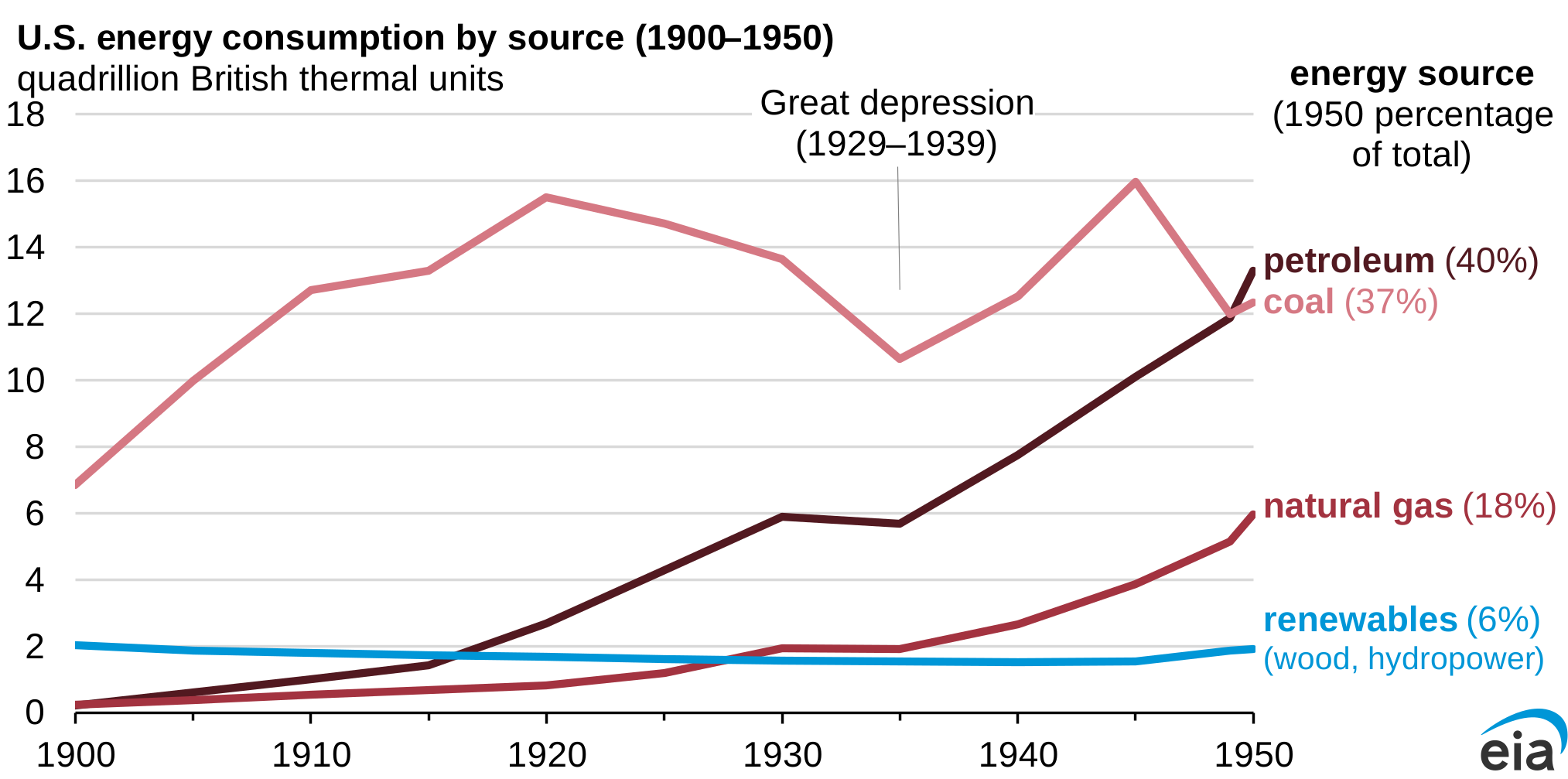
In the 19th century, petroleum was used mainly as kerosene for heating and lighting. In the 20th century, petroleum became the major transportation fuel in the United States for cars, boats, and airplanes. In the early 1900s, George Selden’s horseless carriage, an early term for automobiles, began replacing horses for travel. With the mass-production of Henry Ford’s Model T, the number of cars in the United States grew from 8 million in 1920 to more than 50 million by 1950. During the same period, the first U.S. airline businesses began for mail delivery. Petroleum surpassed coal as the most-used U.S. energy source in 1950.
Early U.S. natural gas energy use was mainly for lighting streetlamps before electricity, but eventually Americans used it for space heating, cooking, and industry. However, it was relatively more difficult to contain and transport than petroleum, coal, and wood. In 1925, the first all-welded pipeline, which decreased leaks, was built along 200 miles between Louisiana and Texas, and by 1950, there was a network of pipelines across much of the country.
Coal consumption grew in the early 20th century as more industrial and electricity plants were built in the United States. U.S. coal consumption fell sharply before rebounding during the 1930s in part because the Great Depression decreased residential, industrial, and railway demand. Coal consumption fell again during the 1940s with growing economic competition from petroleum and natural gas and several large labor strikes in the Appalachia region.
Electricity emerged as an important energy source during the early 20th century. In 1901, the first major power line was built between the United States and Canada at Niagara Falls. Frequently, cities received electricity before rural towns and farms. Legislation passed during the 1930s regulated public utilities and helped to bring electricity to rural America. In 1932, only 11% of U.S. farms had electricity, but by 1942 about half did. By 1950 almost all Americans had electricity.
The late 20th century (1951–2000)
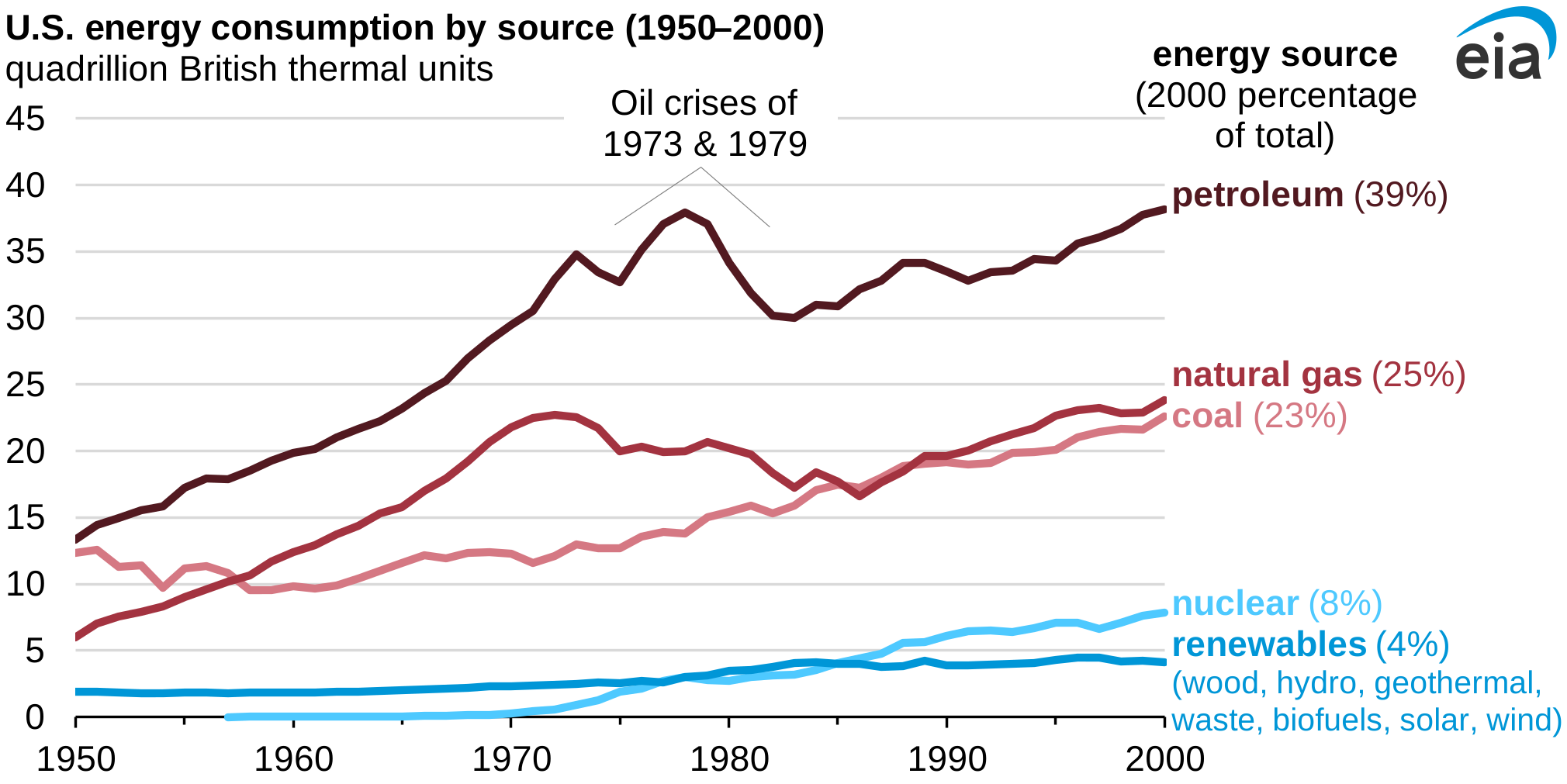
The late 20th century was a time of significant U.S. energy consumption growth, especially fossil fuels, as the growing population traveled more. By 1955, more Americans traveled by air than by train, increasing petroleum demand. Between 1956 and 1992, the U.S. Interstate Highway System was built, allowing Americans to travel farther and faster than ever before. In 1969, the United States took long-distance travel one step further, using petroleum, in part, to fuel Apollo 11, sending the first humans to the moon. Except for the two oil crises during the 1970s, petroleum consumption increased during this period.
Electricity demand drove energy consumption higher, with wider distribution of home heating and cooling and the advent of new technologies such as the internet and computers. A lot of this electricity came from coal, as well as from a new energy source—nuclear energy.
In 1957, following the discoveries made during the Manhattan Project the first full-scale commercial U.S. nuclear power plant came online in Pennsylvania. The U.S. nuclear fleet peaked at 112 operatable units, with 94 operating in 2025.
The 21st century (2001–2025)
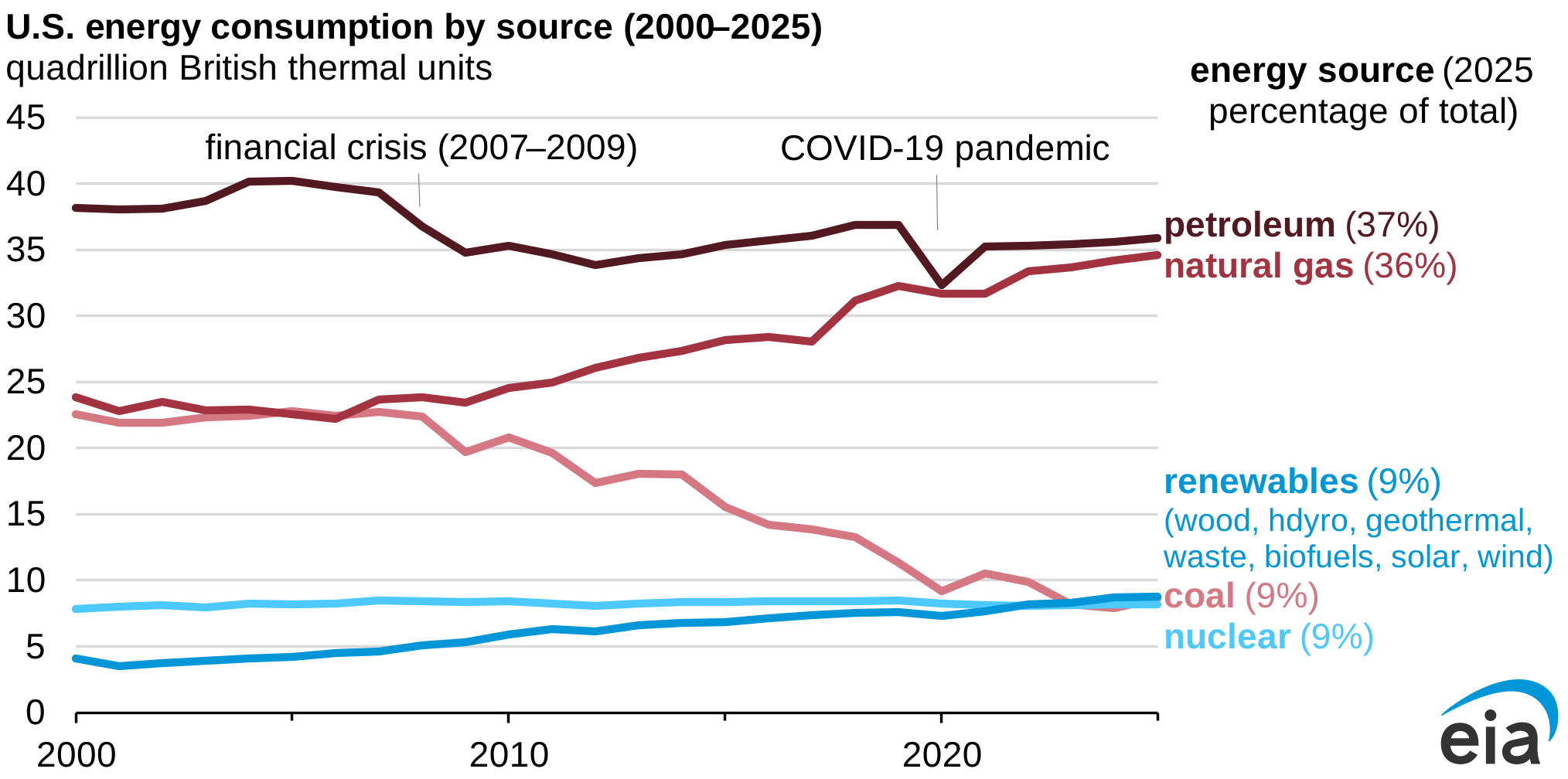
The 21st century brought additional change as the United States became more electrified, with increasing consumption of natural gas and electricity from renewable energy sources, and decreasing consumption of coal and petroleum. U.S. total energy use remained relatively flat between 2000 and 2020, with some temporary petroleum declines during the 2007–2009 financial crisis and the 2020 COVID–19 pandemic. In 2025, U.S. petroleum use remained below pre-pandemic levels.
In the 2000s, natural gas produced from shale formations became more widely available and cheaper because of horizontal drilling and hydraulic fracturing. Between 2011 and 2020, more than 100 coal-fired power plants were replaced with or converted to natural gas. In 2025, natural gas generated more electricity than any other individual energy source and was the most common home heating source in the United States.
In 2022, U.S. energy consumption from renewables surpassed nuclear for the first time since 1984. In 2023, renewables surpassed coal use for the first time since the 1880s. Wind and solar accounted for more energy used than hydropower in 2025.
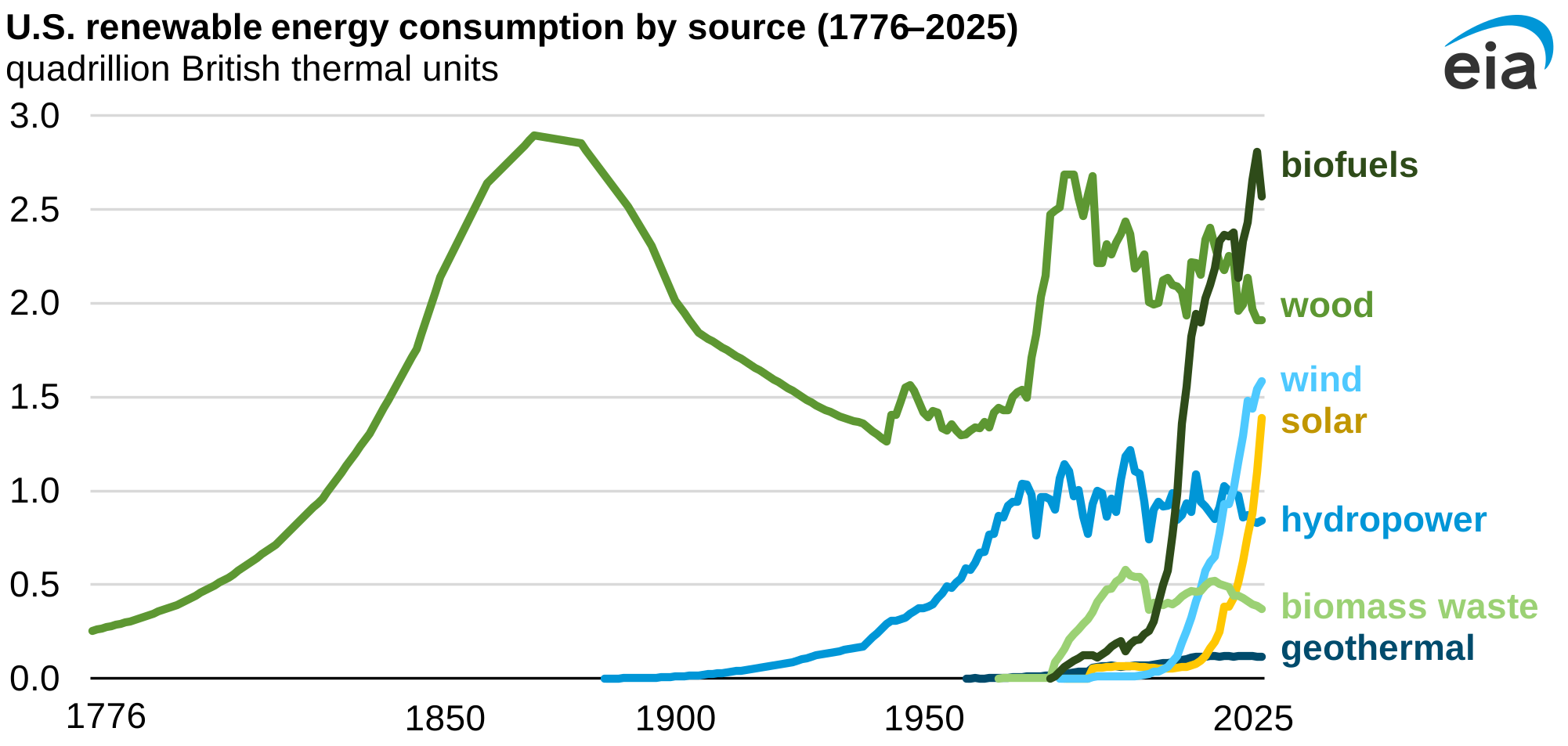
Biofuels, became the most-used U.S. renewable energy source in 2016. Common biofuels include ethanol, biodiesel, and renewable diesel.
Most recently, total U.S. energy use increased in part because of more electricity used to power data centers, cryptocurrency mining, and electric vehicles (EVs). We expect U.S. electricity demand to grow faster than any time since 2000 between now and the end of 2027, mostly because of data centers. Demand from electric vehicles is also growing, with nearly 6 million EVs on U.S. roads in 2024, almost 6 times more than in 2018. Our most recent estimates indicate that U.S. light-duty EV electricity consumption was 24 billion kilowatthours (kWh) in 2025, nearly 15 times more than it was in 2018.

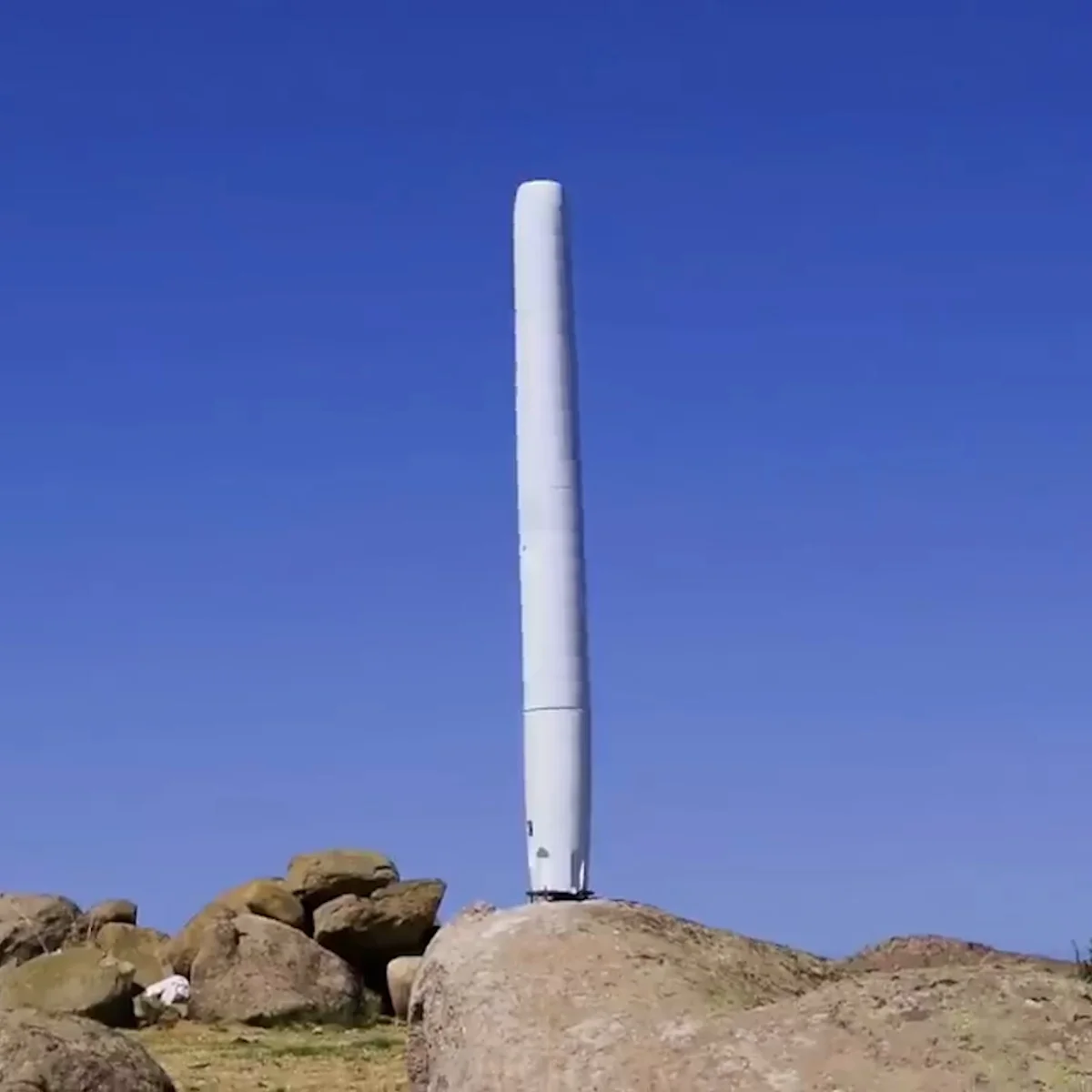 August 11, 2026 — Big energy-producing wind turbines are controversial for several reasons, most notably their design: many people consider them beautiful technological clean energy machines, while many consider them giant eyesores that have to be set next to each other for what seems like many miles that spoil local scenery and threaten wildlife.
 August 7, 2026 — Breakthroughs in the improvement of batteries for storage of electricity have been elusive, even as pressure from rapidly-expanding electricity demand has positioned batteries as a crucial addition to grids in the U.S., Europe and Asia.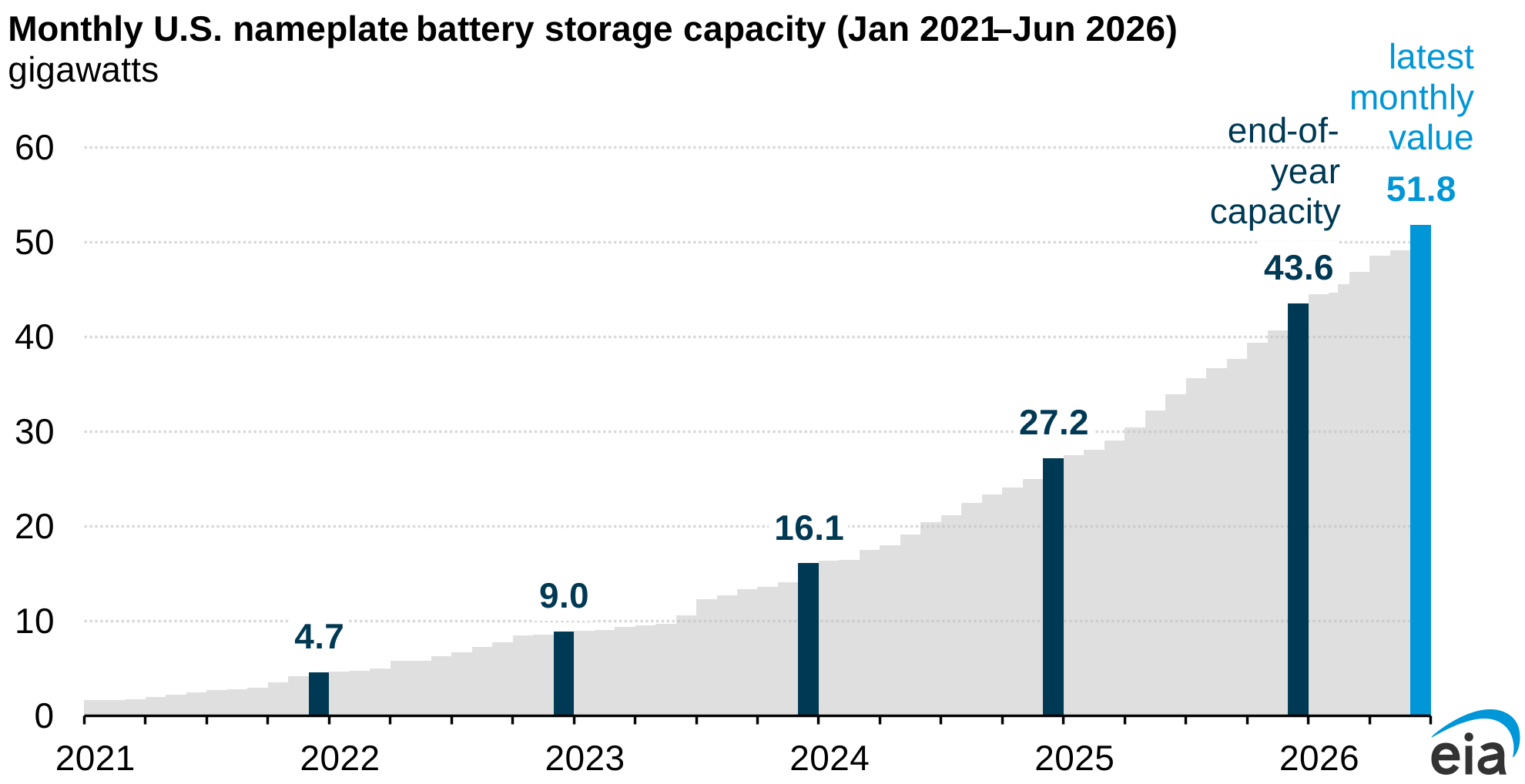
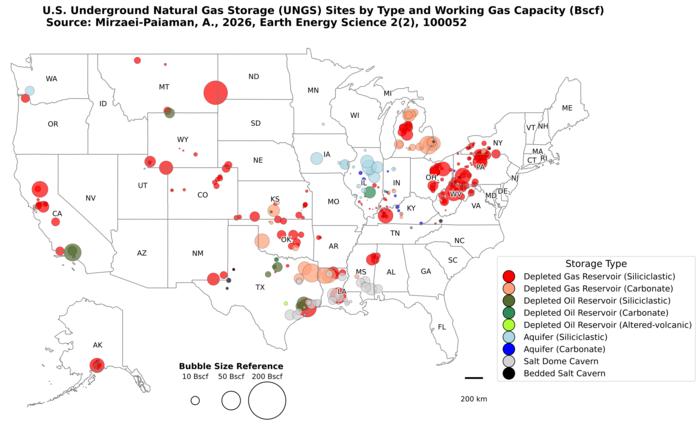

 June 30, 2026 — University of Texas at Austin researchers have developed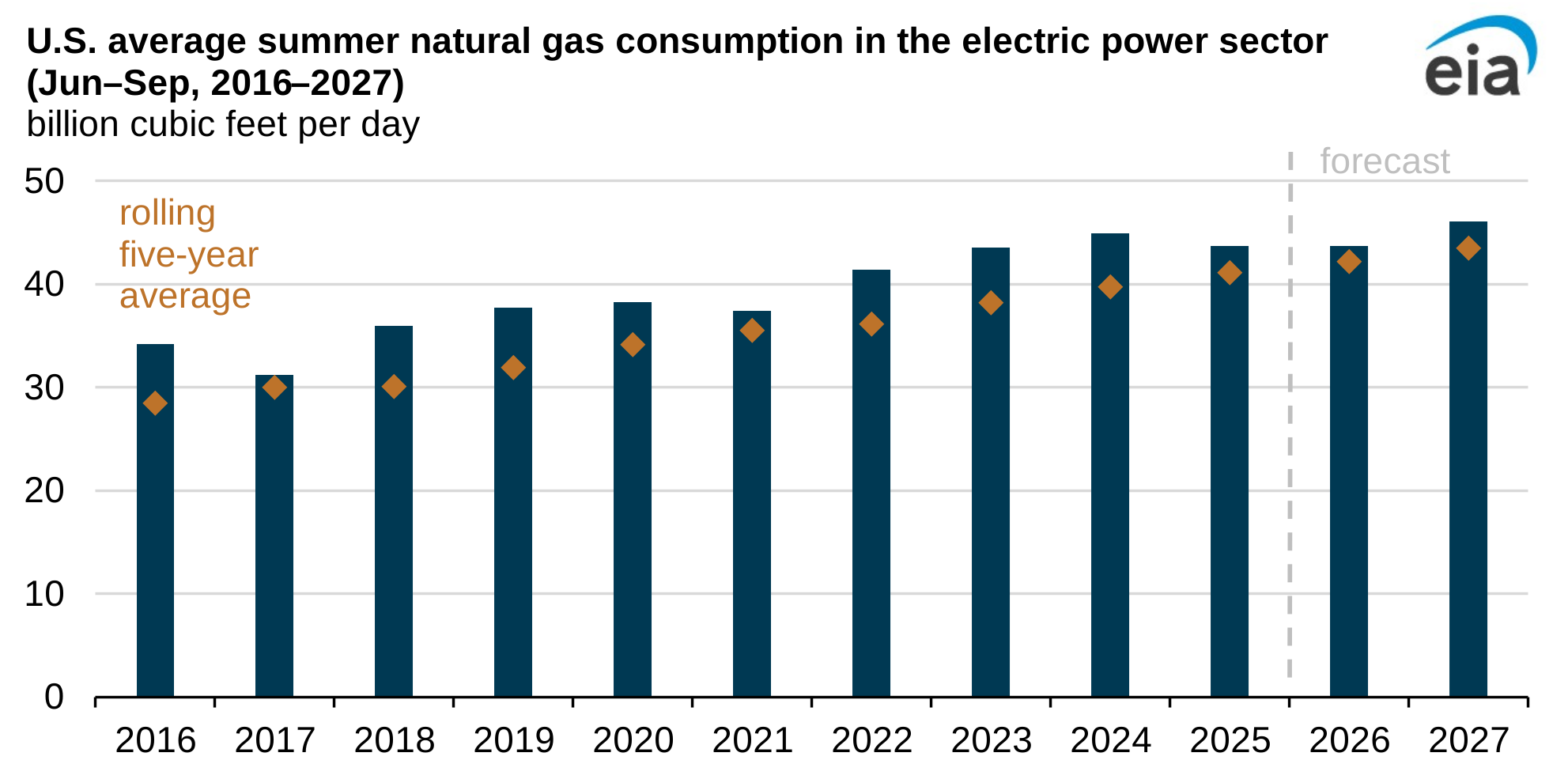
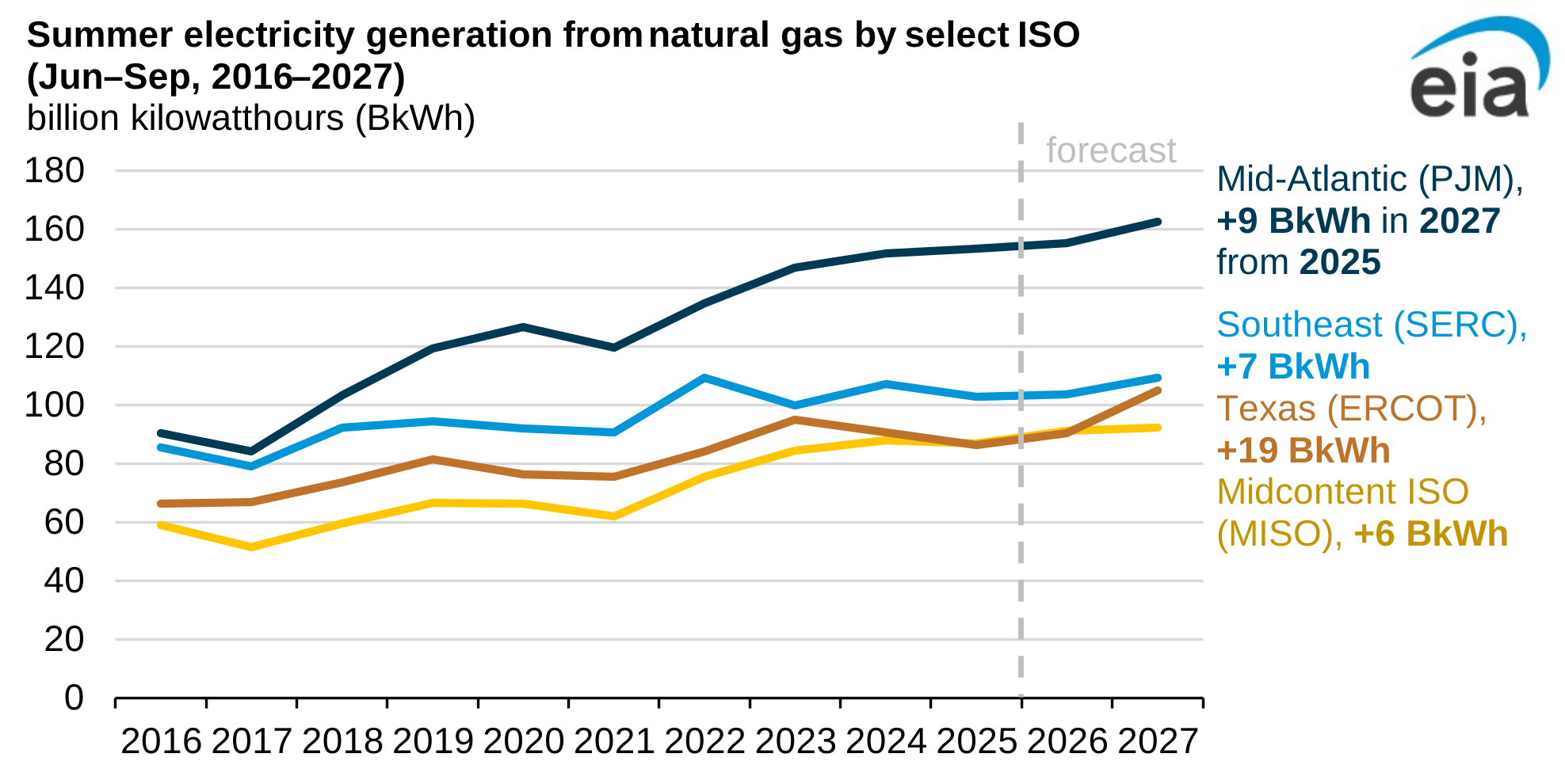

 Data source: U.S. Energy Information Administration,
 March 4, 2026 — Texas state tax revenue from oil and natural gas was down considerably during February 2026 when compared with a year ago, while the state’s overall sales tax income was up nearly 4-percent.